
Mieuxora Care
How to organize a loved one's medical appointments
A simple five-step method to prepare, track and document medical appointments for someone in your care.
When you care for a loved one, medical appointments quickly become a job of their own: booking them, preparing for them, asking the right questions, remembering the answers, then handling the follow-ups. Here is a simple method to stay in control — without heroic memory or piles of loose paper.
1. Centralize everything in one place
The biggest risk isn’t forgetting an appointment: it’s scattering information between the fridge door, a notebook, text messages and your memory. Choose one single home — a binder, a dedicated notebook or a folder — and consistently bring everything back to it:
- the calendar of upcoming appointments;
- contact information for clinics and professionals;
- notes taken during visits;
- follow-up tasks (blood work, forms, next calls to make).
2. Prepare each appointment in writing
A few days before, take five minutes to write down:
- the reason for the appointment;
- changes you’ve noticed since the last visit (sleep, appetite, mood, expressed pain);
- the current medication list, as prescribed;
- your questions, starting with the most important ones.
A written list changes the dynamic of the appointment: you’re no longer trying to hold everything in your head — you’re checking things off.
3. Take notes during the visit
Ask permission to take notes — it is almost always welcomed. Write down the exact words the professional uses, the next steps, and who does what: is the clinic calling back, or are you booking the next appointment?
4. Debrief within 24 hours
That evening or the next day, reread your notes and turn them into concrete actions: appointments to book, documents to find, questions that went unanswered. It’s also the right moment to update other family members who are involved.
5. Keep a record between appointments
A short observation journal — a few lines per day or per week — gives you dated facts instead of impressions at the next visit. Healthcare professionals work far better with “since the 12th, she has been sleeping poorly and eating half her meals” than with “she hasn’t been doing great lately.”
Mieuxora resources are intended for educational and organizational purposes. They are not a substitute for advice from a healthcare professional. If you are concerned about a loved one’s health, consult their care team.
Related resources
Mieuxora Care
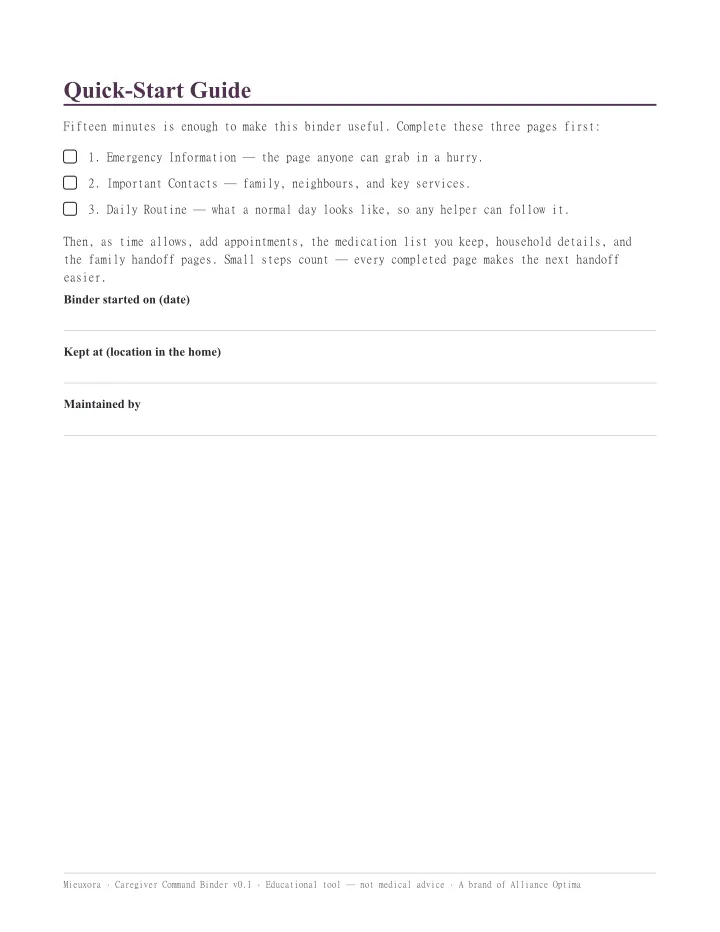
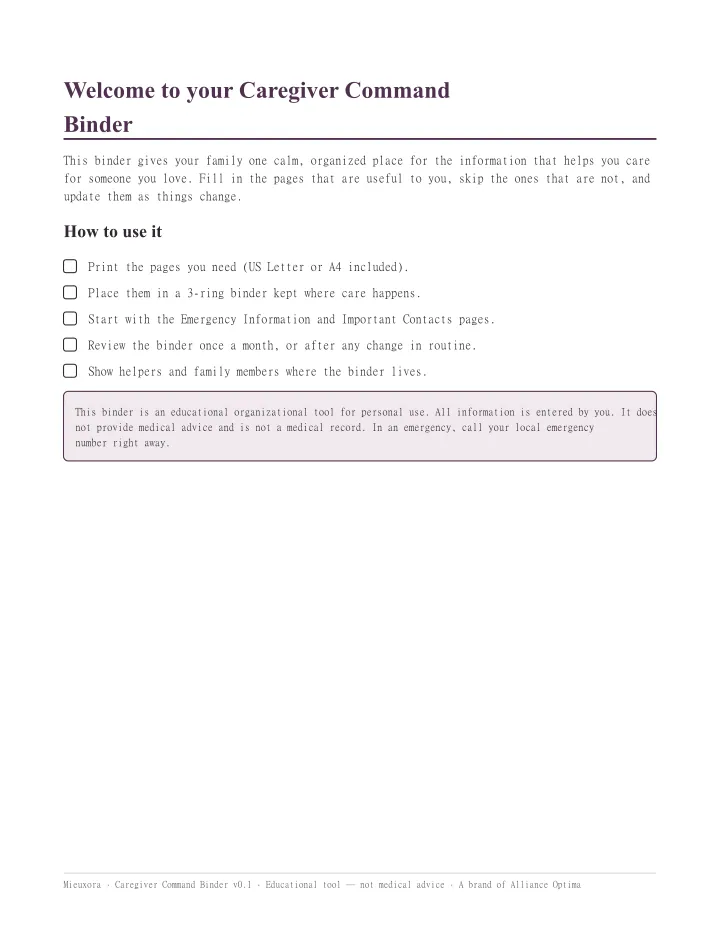
Mieuxora Care Binder
A complete printable organization system for family caregivers: appointments, contacts, medication information, care notes and family communication, all in one place.
View resource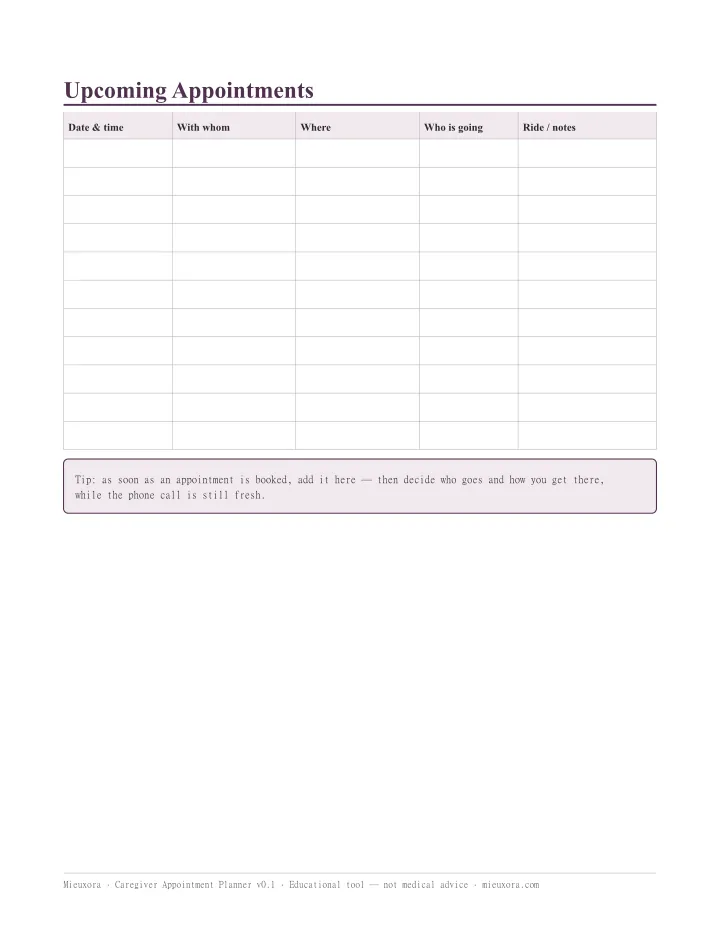
Mieuxora Care
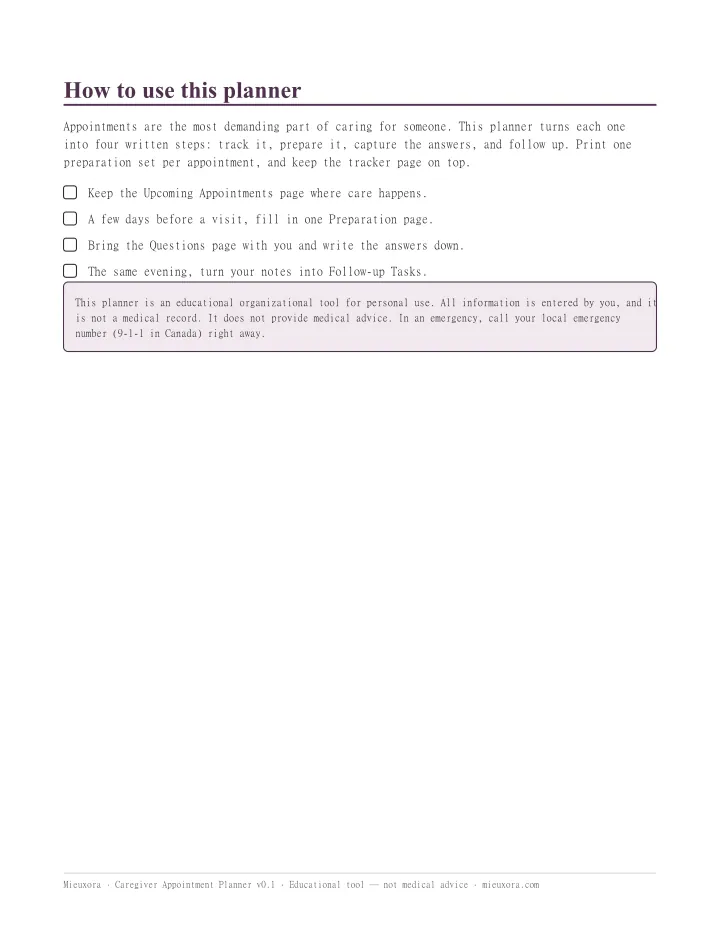
Caregiver Appointment Planner
A printable planner dedicated to medical appointments: preparation, questions, notes and follow-ups.
View resource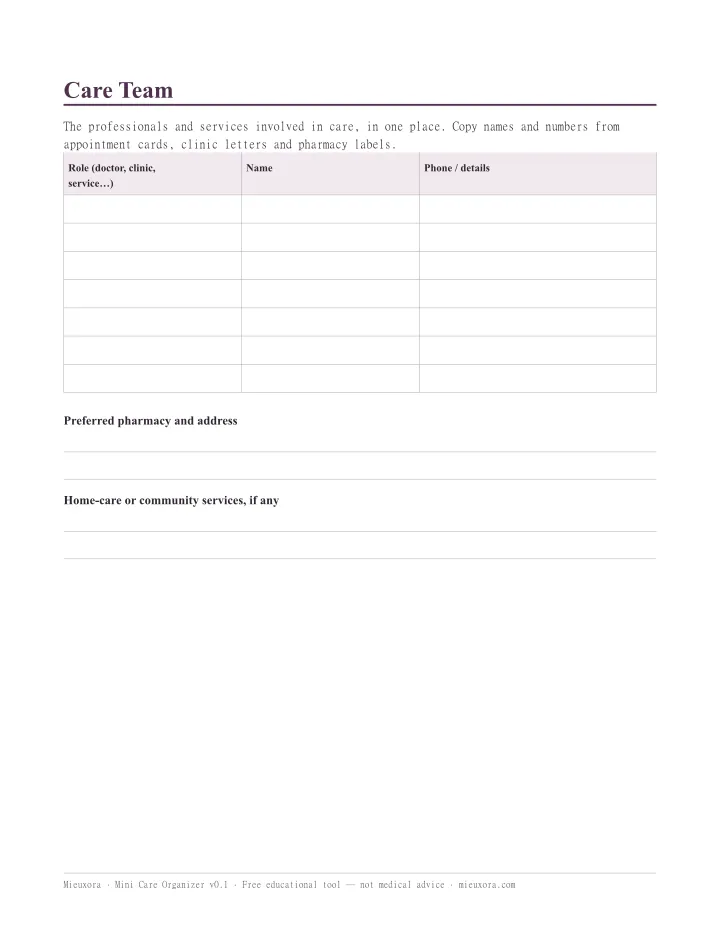
Mieuxora Care
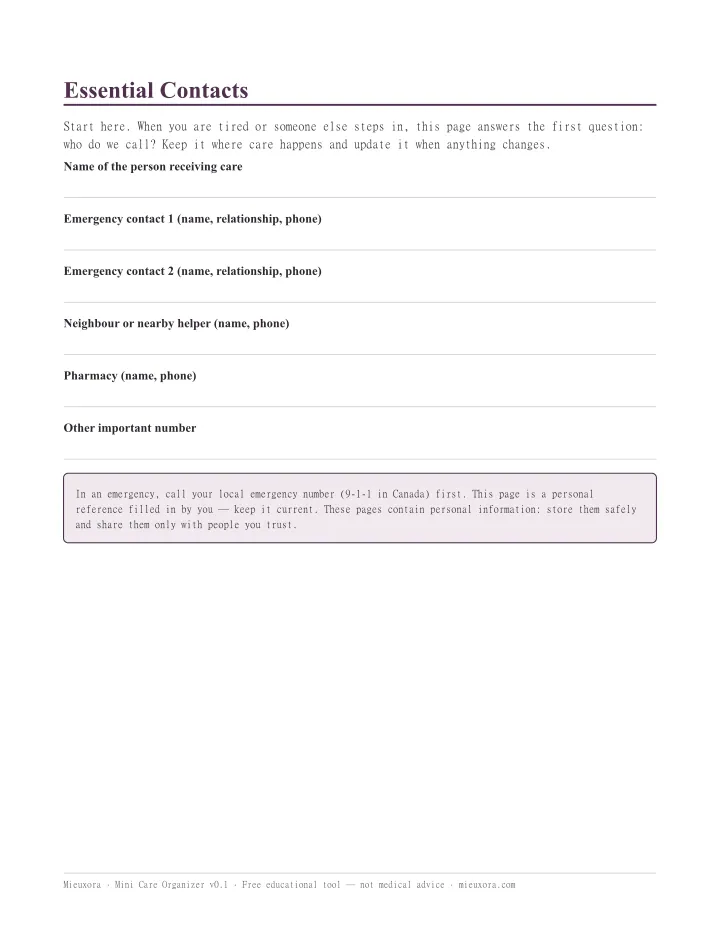
Mini Care Organizer
A free 7-page starter for organizing care for a loved one: essential contacts, care team, next appointment, copied medication list, notes and an emergency page.
View resource